Turn your PIR into a powerful case for your service
The Provider Information Return is CQC’s structured request for evidence about your service, and a weak one shapes the assessment that follows it. We draft yours, map every answer to the relevant quality statement and review it before submission, for £395.

covered
PIR question
full PIR draft
review
The PIR is now the single most important document you write for CQC
Under CQC's assessment framework, the Provider Information Return (PIR) is no longer an annual box-tick. It's the first significant evidence inspectors see — and they use it to decide what to look at, what to question, and where to focus their judgement.
A strong PIR positions your service before the inspector even visits. A weak one tells them where the weaknesses are. The same data, told two different ways, leads to two different inspection experiences.

35h
Average time providers spend drafting their PIR alone
5d
Our turnaround on a full PIR draft, end to end
100%
Submissions delivered on or before deadline
What exactly is a PIR?
A Provider Information Return is a structured submission CQC asks registered providers to complete — describing what your service does well, what could be better, and the evidence behind both. It's structured around the five Key Questions inspectors will assess you against: Safe, Effective, Caring, Responsive, and Well-Led.
The PIR is typically requested annually for adult social care providers, and on demand for other services. CQC limits each free-text response to 500 words. Every sentence is evidence. And inspectors use what you write to plan their assessment.
Inside the PIR document
The PIR follows CQC's five Key Questions. Each section has its own word limit and evidence expectations:
Each section maps to one Key Question
You aren't writing free prose — every paragraph must support a specific Key Question and the quality statements under it.
500-word limit per question
CQC limits each free-text PIR response to 500 words. Every sentence must do work. Verbose answers lose impact.
Inspectors read this first
The PIR shapes inspectors' priorities before they arrive. What you emphasise gets attention; what you skip gets questioned.
Evidence references win points
"We hold weekly audits" is weaker than "Q3 audits showed 96% medication compliance, up from 89%." Numbers, dates, named processes.
The difference one paragraph can make
Two responses to the same PIR question — How does your service ensure safe medication management? — written for the same service. One shows what most providers submit. The other shows what we deliver.
"We provide good care to our service users. Our staff are well-trained in medication administration and we have good systems in place. We regularly review our practice and make improvements where needed. Our medication errors are dealt with appropriately and we learn from them."
"In Q3 2025, our medication error rate fell from 1.2% to 0.4% (a 67% reduction) following the introduction of weekly competency-led audits in May 2025 and the appointment of a Lead Medication Champion. All 23 care staff completed enhanced NICE-aligned medication training, verified by our Clinical Lead. Recent improvement: zero medication-related complaints in the last 6 months, vs 3 in the prior period."
The PIR lifecycle, from request to submission
CQC's typical PIR submission window is around four weeks from request. Here's how we structure that time:
CQC issues your PIR request
You receive notification via the CQC Provider Portal. The submission deadline is set — usually 4 weeks from issue. Contact us immediately for fastest turnaround.
Service-wide evidence review
We map your existing data: audits, training records, incident logs, complaint resolutions, feedback. Identify gaps and quick-win evidence opportunities.
Section-by-section drafting
Full PIR drafted to CQC's structure — Safe, Effective, Caring, Responsive, Well-Led. Every answer evidence-mapped, every word inside the 500-word limit, every claim defensible.
Ex-CQC inspector review
A former CQC lead inspector reviews the full draft against the assessment framework. Final polish, evidence checks, language sharpening.
Your review & sign-off
You receive the polished PIR for review. We walk through every section together via video, answer questions, make any adjustments.
Submission to CQC
PIR submitted via the CQC Provider Portal, with confirmation. We retain a copy for your records and for use at any subsequent inspection.
For tight-deadline cases (already late in your submission window), we can compress the full process into 3–5 days. Speak to us about urgent turnarounds.
PIR support packages
Generic PIR
Template
A comprehensive, adaptable template covering every required area — a structured starting point for you to customise to your service.
Proofreading
& Improvement
Professional refinement of your prepared PIR — clarity, accuracy, regulatory tone and full alignment with quality statements.
Tailored PIR
for Care
Our premium service — personalised consultation and a fully bespoke PIR written to a regulatory standard, with minimal demand on your time.
All packages remote and subject to terms and conditions
Three packages by level of support — choose the one that fits your needs and budget*
Why providers trust us with their PIR
A PIR is too important to leave to a template or an admin task:
↓ Hover over each tile to see what makes it different
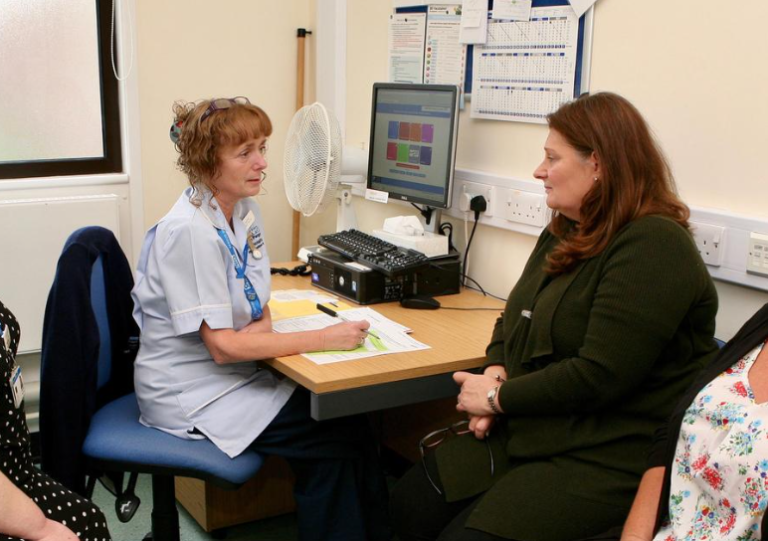
Ex-CQC inspector review
Every PIR we draft is reviewed by a former CQC Lead Inspector before delivery. We know how each section will be read on the other side.

Evidence-led drafting
We don't write generalities. Every claim is mapped to a specific piece of evidence — numbers, dates, named processes. Defensible answers only.

Framework-aligned
Every answer maps to a specific quality statement under the relevant Key Question. Nothing wasted, nothing missed.

5-day standard turnaround
Full PIR drafted, reviewed and delivered in 5 working days. Urgent 3-day turnaround available for tight deadlines.
Frequently asked questions
Yes. The PIR remains a key input to CQC’s assessment process under the current framework. It’s structured around the five Key Questions (Safe, Effective, Caring, Responsive, Well-Led) and the underlying quality statements. Inspectors use what you submit to plan and focus their assessment.
CQC typically gives you around four weeks from request to submission. The deadline appears in your Provider Portal when the PIR is issued. Our standard 5-day turnaround leaves plenty of buffer for review and adjustments.
Contact us immediately. We can compress the full process into 3-5 days for tight-deadline cases. The sooner you reach out, the more we can do to help you submit a quality response on time.
Yes, this is our ‘Tailored PIR for Care’ package. We work with you through a detailed consultation to understand your service, your data, and your achievements, then write a fully bespoke PIR. You sign off, we submit. Minimal demand on your time.
Audit data, training matrices, incident logs, complaint summaries, feedback records, and any quality improvements you can demonstrate. We help you identify what you already have and what would strengthen your responses. We never invent evidence — we surface yours.
Indirectly but significantly. A strong PIR shapes inspector priorities and demonstrates governance maturity before they visit. A weak PIR can trigger extra queries, suggest poor leadership, and miss the chance to evidence your real strengths. Same service, two narratives, two outcomes.
Yes. Many providers do both — a mock identifies the evidence gaps, then we shape the PIR around the strongest version of what you actually do. Bundle pricing available — get in touch.
Yes. We work entirely via secure video calls, screen-sharing and shared evidence folders. This means no travel costs, no scheduling friction, and we can serve providers anywhere in England. The quality is identical to on-site work.
Authoritative sources
Official CQC reference material for the Provider Information Return:
- CQC — Adult social care Provider Information Return
- CQC — Assessment framework & quality statements
- Care Quality Commission — Official CQC website
Make this year's PIR your strongest yet
30-minute scoping call · No obligation · Honest assessment of your PIR readiness