Starting Your Healthcare Agency on a Shoestring Budget: The Smart Money Guide to Launching with Less
Let’s have a different conversation about starting a healthcare agency, shall we? You’ve probably read articles that make it sound like you need the GDP of a small country just to get your CQC registration sorted. Well, here’s some refreshing honesty: you absolutely can start a domiciliary care agency with as little as £10,000 if you’re strategic, resourceful, and willing to grow smart rather than fast.
The secret isn’t having unlimited capital—it’s understanding exactly where to spend your money, where you can economise without compromising quality, and how to time your investments to match your business development. Thousands of successful care agencies started on tight budgets, and many of today’s thriving providers began with founders who were more rich in determination than in bank balances.
The key is thinking like a savvy entrepreneur rather than a nervous perfectionist. You don’t need everything perfect from day one—you need everything compliant and functional from day one, with a clear plan to upgrade and expand as your income grows.
The Strategic Timing Game: Your Secret Weapon
Here’s the insider knowledge that could save you thousands: timing is everything in the care business startup world. The biggest money-draining mistake new providers make is hiring staff and committing to major expenses months before they’re actually needed.
The CQC Interview Strategy: Don’t hire permanent staff until after your CQC interview is scheduled. The registration process can take 3-6 months, and you could be paying salaries for people who can’t legally work yet. Instead, wait until the CQC confirms your interview date—this usually signals they’re close to approval. Then begin your recruitment process, timing staff start dates for just after your expected registration date.
This single strategy alone can save you £15,000-£30,000 in premature salary costs. You’re not being cheap; you’re being businesslike.
The Bank Staff Brilliance: Start with bank/agency staff rather than permanent employees. This gives you incredible flexibility to scale up and down based on actual demand rather than hoped-for demand. Bank staff cost more per hour but carry no holiday pay, sick pay, or National Insurance obligations. When you’re small and building your client base, this flexibility is worth its weight in gold.
You can transition your best bank staff to permanent contracts once you have consistent income to support fixed salary costs. Many successful agencies still use this mixed model years later because it provides resilience against fluctuating demand.
The Property Strategy: Smart Space Solutions
If you’re registering for supported living services and have identified a property, think carefully about how to maximise its value whilst maintaining CQC compliance.
Keep Office Space Separate: The CQC prefers clear separation between care delivery premises and administrative operations. Don’t set up your office within the care property itself—this creates complications during registration and ongoing inspections.
Professional Meeting Solutions: Use rent-as-needed office spaces like Regus, WeWork, or local business centres for client meetings and professional appointments. These typically cost £20-£50 per meeting room booking, giving you a professional environment without monthly rental commitments.
Generate Income While Waiting: Until registration approval, that supported living property can work for you. Rent rooms to professionals or students, generating £1,200-£2,000 monthly to cover your pre-registration expenses. Just ensure you can transition smoothly to care use once approved.
The Training Revolution: Learning Without Breaking the Bank
Training doesn’t have to drain your budget, especially in today’s digital world where quality education has become more accessible than ever.
Online Training Gold Mine: Most mandatory care training is now available online at fraction of traditional costs. The NHS provides free Care Certificate training through their e-learning platform—that’s hundreds of pounds saved per staff member right there.
Face-to-Face When Needed: Some training requires hands-on elements, but you don’t need to book expensive venues immediately. Wait until after registration when you’re actually hiring staff, then use community centres, church halls, or local libraries for group sessions. These venues typically charge £20-£50 per session compared to hundreds for commercial training facilities.
The Just-in-Time Training Model: Don’t pay for training until you need it. Once your CQC interview is scheduled and you’re confident about approval, that’s when to book any face-to-face training sessions. This prevents paying for training that expires before you can use it.
The Office Solution That Actually Works
Let’s address the reality: working from home for a care agency creates GDPR compliance nightmares unless your property is properly zoned for business operations—which most residential properties aren’t.
The Flexible Office Approach: Instead of expensive long-term office leases, use flexible workspace solutions:
- Hot-desking memberships at business centres (£100-£200 monthly)
- Virtual office services for professional address and mail handling (£50-£150 monthly)
- Meeting room bookings for client appointments and staff meetings as needed
- Shared workspace access for administrative tasks
GDPR-Compliant Operations: This approach automatically solves most data protection issues because professional workspace providers already have appropriate security measures, internet protocols, and confidentiality safeguards in place.
The Growth Transition: Once you’re generating £15,000-£20,000 monthly revenue, then consider dedicated office space. By that point, you’ll know exactly what you need and can afford proper commercial premises.
Technology Strategy: Start Simple, Scale Smart
You don’t need comprehensive care management systems from day one. Paper-based operations are still perfectly acceptable for small agencies, and often more reliable than rushing into expensive software before you understand your actual needs.
The Minimal Digital Start:
- Basic phone and email system
- Simple spreadsheets for scheduling (free)
- Paper-based care plans and visit records
- Basic accounting software (£20-£30 monthly)
When to Invest in Care Software: Wait until you have your first few clients and understand your actual workflows. Then invest in scheduling and care management apps (£50-£200 monthly) based on your real operational needs rather than theoretical requirements.
The Cost-Effective Progression: Paper → Basic digital tools → Comprehensive care management system. This progression saves thousands in upfront technology costs whilst ensuring you choose systems that actually fit your working methods.
The Lean Documentation Approach
Yes, you need comprehensive policies and procedures, but you don’t need premium bespoke documents that cost thousands.
Smart Template Strategy: Invest £300-£800 in basic policy template packages that meet CQC requirements. These provide the foundation you need for registration whilst leaving budget for more critical expenses.
The Enhancement Timeline: Start with compliant basic policies, then enhance and customise them as you gain experience and generate revenue. Your policies will be better when informed by actual operational experience rather than theoretical planning.
DIY Documentation Success: Spend time (which costs nothing but effort) thoroughly customising templates for your specific service. This creates genuinely tailored documentation for a fraction of bespoke costs.
Marketing on a Microbudget: Relationship Power
Forget expensive advertising campaigns initially. Relationship-based marketing costs almost nothing but delivers better results than most paid advertising.
The £500 Marketing Launch:
- Professional business cards and simple leaflets: £200
- Basic website using templates: £200
- Local networking and community engagement: £100
Guerrilla Marketing Tactics:
- Attend free local networking events and health fairs
- Build relationships with GPs and district nurses through professional visits
- Partner with local charities and community organisations
- Focus on excellent service delivery that generates word-of-mouth recommendations
The Word-of-Mouth Multiplier: Nothing beats outstanding care for generating referrals. Invest your energy in delivering exceptional service for your first clients, and let their recommendations drive growth.
The Minimal Viable Registration Strategy
Think of your initial setup as creating a minimal viable care agency—the smallest version that can operate legally and effectively whilst building towards your full vision.
Essential-Only Spending:
- CQC registration fees: £800-£1,500
- Basic insurance coverage: £1,500-£2,500
- Flexible workspace membership: £150-£300 monthly
- Basic policy templates: £300-£800
- Essential equipment (phone, laptop): £500-£1,000
- Initial marketing materials: £200-£500
- Contingency fund: £2,000-£3,000
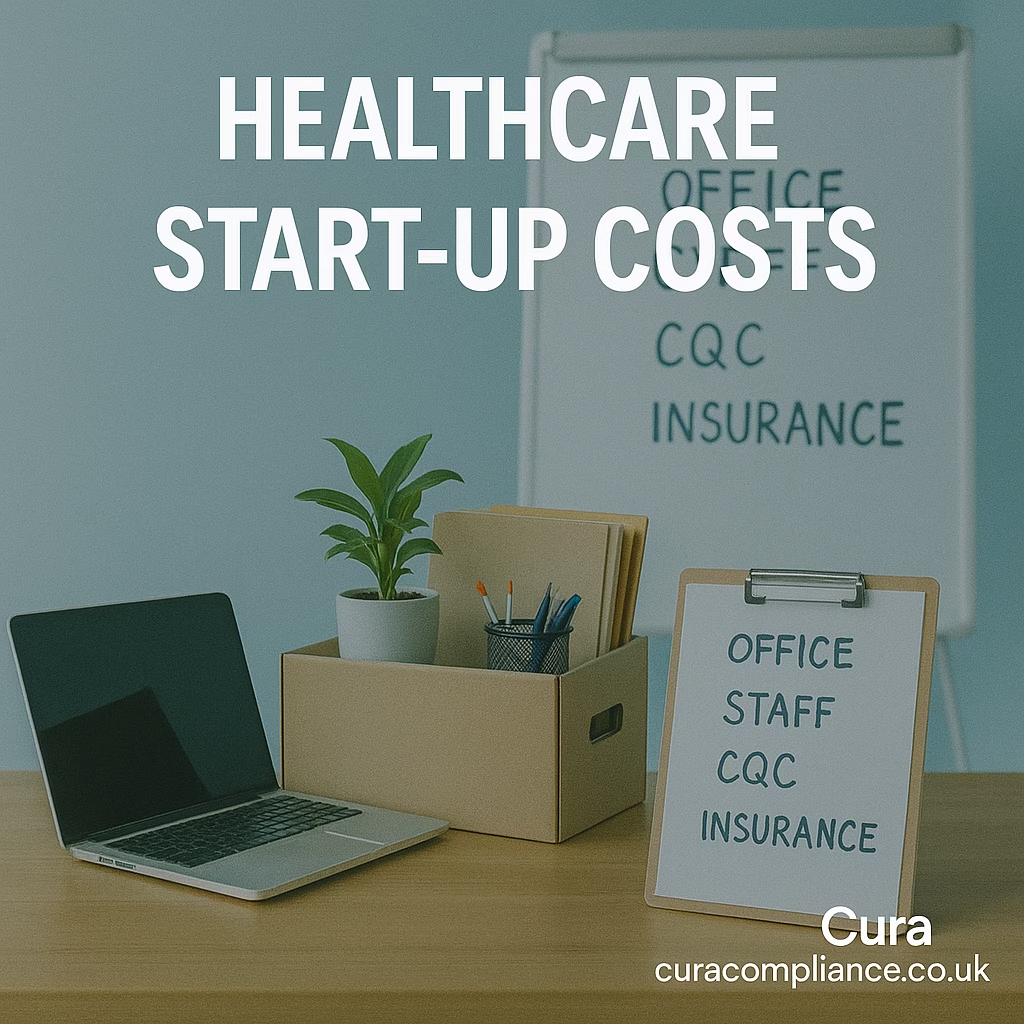
Total startup cost: £6,000-£10,000
This gets you legally operational with room to grow. Everything else becomes investment from revenue rather than upfront costs.
Cash Flow Management: Your Survival Skill
With a tight budget, cash flow management becomes absolutely critical. Understanding exactly when money comes in and goes out prevents the gaps that kill budget startups.
The Payment Strategy: Start with private-paying clients where possible—they often pay faster than local authorities. Build your local authority relationships gradually whilst maintaining cash flow from private clients.
Bank Staff Benefits: Using bank staff initially means you only pay for hours actually worked, eliminating the fixed salary costs that can overwhelm small agencies during quiet periods.
The Revenue-Before-Expansion Principle
Here’s the golden rule: only expand when expansion is funded by existing revenue, not by additional borrowing.
Phase One (Months 1-6): Operate lean, focus on compliance and quality, build initial client base Phase Two (Months 6-12): Reinvest early profits into better systems and modest expansion
Phase Three (Months 12-18): Consider dedicated premises, permanent staff, and significant growth investments
This ensures sustainable growth funded by business success rather than optimistic projections.
The Success Reality
Starting a healthcare agency on a tight budget isn’t just possible—it’s often preferable because it forces you to be resourceful, efficient, and focused on what truly matters: delivering excellent care that generates sustainable income.
These strategies aren’t about cutting corners or compromising quality. They’re about intelligent resource allocation, smart timing, and building your business systematically rather than speculatively.
Remember: Every successful care agency started with their first client, their first care worker, and their first day of operations. The size of your starting budget matters far less than the quality of your planning, the strength of your commitment, and your willingness to grow smart rather than fast.
Ready to start your healthcare agency journey without breaking the bank? Smart budgeting and strategic timing can get you operational for under £10,000 whilst building towards long-term success.
Budget Startup Success Strategies:
Start with minimal viable operations around £6,000-£10,000 total investment. Time staff recruitment to match CQC approval rather than optimistic projections. Use bank staff initially for maximum flexibility and reduced risk. Leverage flexible workspace solutions instead of expensive office leases. Utilise online training resources and community venues for cost-effective staff development. Start with paper-based systems and basic templates before investing in comprehensive software. Focus on relationship marketing and word-of-mouth for cost-effective client acquisition. Plan systematic growth funded by revenue rather than additional borrowing.