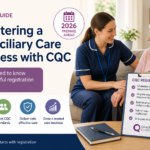
The CQC Registration Reality Check: What They Don’t Tell You About the 16-26 Week Marathon
So, you’ve decided to start a care service. Brilliant! You’ve got passion, purpose, and probably a rather optimistic business plan. Then someone mentions those three little letters that can make even the most confident entrepreneur break into a cold sweat: C-Q-C.
The Care Quality Commission registration process isn’t exactly what you’d call a quick chat over coffee. It’s more like a very thorough, very official examination of everything you think you know about running a care service. And here’s the thing nobody mentions in those glossy “start your own care business” guides: you literally cannot operate until they say yes.
That’s right. No trial runs, no soft opening with your mum as the first client, no “just testing the waters.” Until that registration certificate lands in your inbox, you’re essentially running a very expensive rehearsal for a play that might never open.
The Honest Timeline: Why 16-26 Weeks Isn’t Just a Suggestion
Let’s talk numbers, shall we? The CQC cheerfully states that registration takes “at least 10 weeks” from submission to decision. This is a bit like saying a Sunday roast takes “about an hour” whilst conveniently forgetting to mention the prep time, the shopping, and the inevitable moment when you realise you’ve forgotten the Yorkshire puddings.
In reality, most providers need 16 to 26 weeks from the moment they start thinking seriously about registration to the day they can actually open their doors. Sometimes longer if they hit a few bumps along the way—and trust us, there are plenty of opportunities for bumps.
The process breaks down into four distinct stages, each with its own particular brand of administrative joy. Think of it as a carefully choreographed dance where the CQC leads, you follow, and any misstep means starting the routine all over again.
Stage One: The Preparation Marathon (2-6 Weeks of “Surely This Can’t Be That Complicated”)
This is where confidence meets reality in what can only be described as a spectacular collision. You’ll need DBS checks (2-4 weeks if the stars align), a registered manager sorted (1-2 weeks of paperwork), and documentation that would impress a university librarian.
Your Statement of Purpose needs to be more detailed than most people’s wedding vows. Your policies and procedures must cover every conceivable scenario, from how you’ll handle complaints to what happens if someone has an allergic reaction to your motivational posters.
And your premises? They need to be absolutely, completely, utterly ready. Not “nearly ready” or “ready enough” or “well, the carpet’s going in next week.” Ready ready. The kind of ready where you could start caring for people tomorrow if needed.
The CQC provides helpful guidance on their website about what you need before applying. We recommend reading it thoroughly, then reading it again, then perhaps printing it out and sleeping with it under your pillow for good measure.
Stage Two: Submission and the Waiting Game Begins (1-2 Weeks of Finger-Crossing)
Submitting your application feels a bit like posting a very important letter and then standing by the postbox wondering if you should have used recorded delivery. The CQC’s validation process will check every box, every upload, every crossed ‘t’ and dotted ‘i’.
Miss something? Back it comes, adding precious weeks to your timeline and giving you that special feeling of déjà vu that only bureaucracy can provide. This is why meticulous preparation isn’t just recommended—it’s essential for your sanity and your bank balance.
Stage Three: Assessment and Interview (8-16 Weeks of Professional Scrutiny)
Here’s where things get properly serious. A CQC inspector will read your application with the kind of attention to detail usually reserved for peace treaties or warranty small print. They’re looking for evidence that you understand the five fundamental questions the CQC asks of every service: Is it safe? Effective? Caring? Responsive? Well-led?
The registration interview isn’t a friendly chat about your aspirations. It’s a thorough examination of your knowledge, competence, and ability to protect vulnerable people. They’ll want to know how you’d handle safeguarding concerns, manage medicines, deal with emergencies, and maintain dignity and respect in every interaction.
Your responsiveness during this stage is absolutely critical. When the CQC asks for additional information, they don’t mean “when you get around to it” or “after you’ve finished that other project.” They mean promptly, completely, and with the kind of attention that demonstrates you understand the gravity of what you’re proposing to do.
Stage Four: Decision Day (1-2 Weeks of Either Celebration or Contemplation)
The Notice of Decision arrives with all the ceremony of a exam result. Approved? Congratulations, you can finally stop explaining to your accountant why you’re paying rent on an empty building. Refused? Don’t panic—you have 28 days to appeal and provide additional information.
The Reality of What Slows Things Down (And How to Avoid the Common Pitfalls)
Some delays are entirely predictable and completely avoidable. Incomplete applications are the registration equivalent of turning up to an exam without a pen. Being unavailable for interviews when the CQC offers dates is like missing your own job interview because you forgot to check your diary.
The most frustrating delays come from underestimating the premises requirements. Your location must be fully operational during the site visit. “Nearly finished” doesn’t count. “Just waiting for the safety certificate” won’t cut it. The inspector needs to see a functioning care environment, not a building site with potential.
Complex applications—those involving multiple locations, controlled drugs, or various regulated activities—require additional assessment time. It’s not personal; it’s proportional to the responsibility you’re asking to undertake.
Can You Speed Things Up? (The Art of Strategic Patience)
The CQC does offer an urgent application process, but before you get excited, understand that “urgent” in CQC terms usually relates to genuine patient safety concerns or continuity of care issues. Having staff ready to start or facing financial pressure typically doesn’t qualify.
What does help is being exceptionally well-prepared, responding to requests within 48 hours, and maintaining flexibility for interviews and site visits. Professional guidance from consultants who understand the process can prevent the common mistakes that add weeks to your timeline.
The Uncomfortable Truth: You Cannot Operate While You Wait
This cannot be overstated: operating before registration is a criminal offence. Not a civil matter, not a regulatory hiccup—a criminal offence with potential unlimited fines or imprisonment.
During your waiting period, you’re essentially paying all the costs of running a care service whilst generating precisely zero income. Staff salaries, rent, insurance, utilities—all outgoing, nothing coming in. It’s like funding a very expensive dress rehearsal for a play that might get cancelled.
Making the Process Work for You (Rather Than Against You)
Start with realistic expectations and build in buffer time. Six to seven months from initial preparation to opening day is sensible planning. Use this period productively—develop robust systems, build your team, establish relationships with local authorities and healthcare providers.
Your policies need to be more than compliant; they need to be practical and implementable. The CQC isn’t impressed by beautiful documents that bear no resemblance to real-world care delivery. They want evidence that you understand both the letter and the spirit of the regulations.
The Long-Term Perspective: Registration Is Just the Beginning
Remember, CQC registration isn’t a qualification you earn once and forget about. It’s the beginning of an ongoing relationship with your regulator. Your first inspection will typically happen within 12 months of registration, and maintaining compliance requires continuous attention to quality, safety, and improvement.
The rigorous registration process, frustrating as it can be, serves a crucial purpose. It ensures that only providers who genuinely understand their responsibilities and can demonstrate their competence are entrusted with caring for vulnerable people.
Getting Professional Support: When DIY Isn’t the Best Approach
The registration process is complex enough that many providers benefit from professional guidance. Consultants who specialise in CQC registration understand exactly what inspectors are looking for and can help you avoid the common pitfalls that cause delays or refusals.
At Cura Compliance, we’ve supported numerous providers through successful registrations because we understand that this process isn’t just about ticking boxes—it’s about building the foundations for excellent care delivery.
The CQC registration journey can feel overwhelming, but it’s entirely manageable with proper preparation, realistic expectations, and professional support when needed. The key is viewing it not as an obstacle to overcome but as an opportunity to ensure you’re genuinely ready to provide outstanding care.
Ready to start your CQC registration journey? Understanding the timeline and requirements is the first step towards successful registration and a thriving care service.