Is CQC Registration Actually Difficult? The Brutally Honest Truth About What You’re Really Getting Into
Let’s address the elephant in the room, shall we? If you’re considering CQC registration, you’ve probably encountered two distinctly different camps of opinion. Camp One consists of cheerful consultants and business advisors who’ll tell you it’s “perfectly straightforward if you’re prepared.” Camp Two includes battle-weary care providers who describe it as “the most soul-crushing bureaucratic marathon imaginable.”
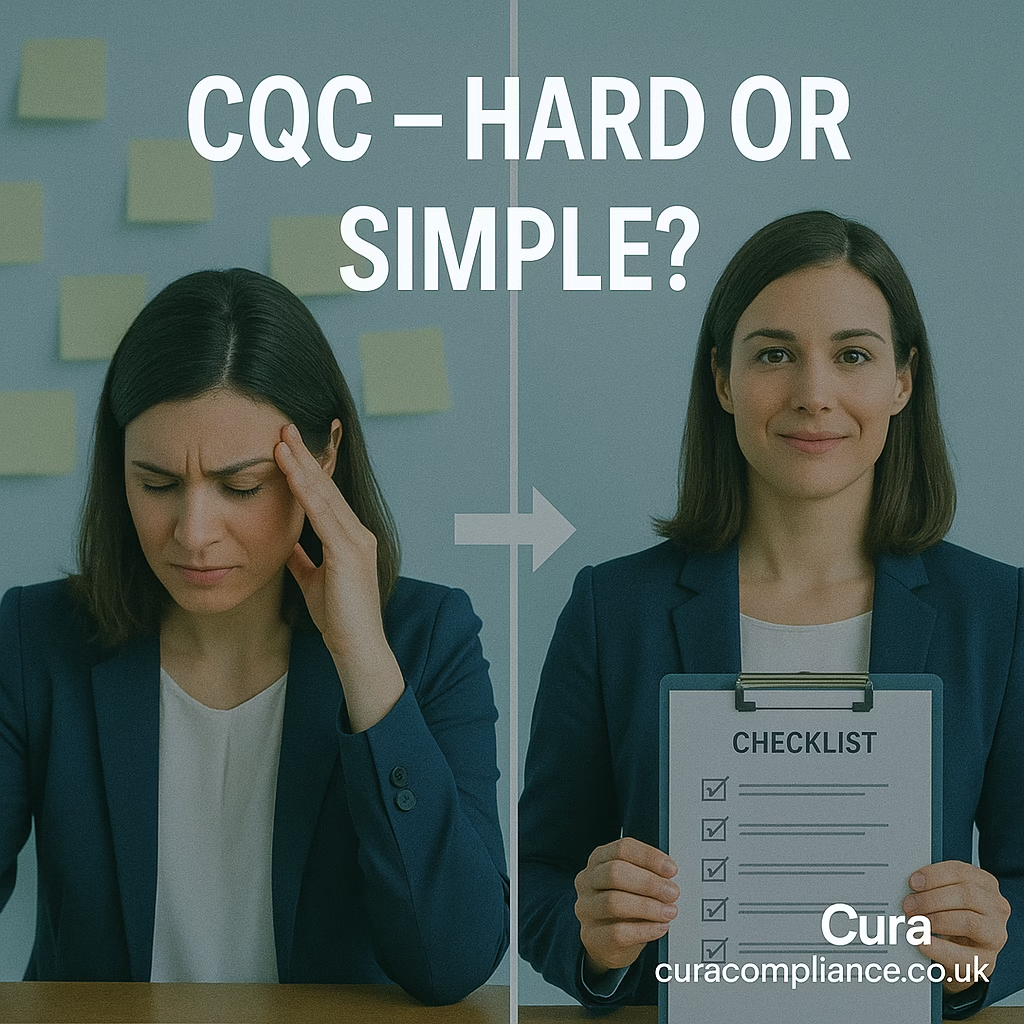
So which is it? Is CQC registration a manageable administrative process or a Kafkaesque nightmare designed to test your commitment to the care sector?
The honest answer—the one that nobody seems willing to give you straight—is that it’s both. CQC registration is rigorous, demanding, and occasionally maddening. But it’s also absolutely achievable, and thousands of providers successfully navigate it every year. The difference between those who emerge victorious and those who give up halfway through usually comes down to one thing: knowing what you’re actually signing up for.
Let’s have that conversation nobody else seems willing to have.
Why Everyone Says It’s Difficult (Spoiler: They’re Not Wrong)
The Documentation Mountain
CQC registration isn’t a form you fill out over a cup of tea. It’s a comprehensive examination of your entire approach to care delivery, requiring documentation that can easily run to hundreds of pages. You need comprehensive policies covering everything from medication management to what happens if someone complains about your choice of biscuits.
Your Statement of Purpose needs to be more detailed than most people’s life plans. Financial viability evidence must demonstrate you can sustain quality care even when everything goes wrong. Enhanced DBS checks, insurance certificates, employment histories, references—the list goes on with the relentless persistence of a determined bureaucrat.
For someone encountering this for the first time, it’s genuinely overwhelming. You don’t just need to gather information; you need to understand what standard it must meet, how to present it effectively, and why each piece matters in the broader regulatory framework.
The Excellence Expectation
Here’s where it gets interesting: the CQC doesn’t accept “good enough.” They expect excellence, and their definition of excellence is both specific and uncompromising. Your policies must be fully compliant with current legislation, specific to your service rather than generic templates, evidence-based and practically implementable, and correctly referenced with current dates and citations.
This isn’t box-ticking—it’s demonstrating genuine competence. The CQC will test your knowledge through interviews and site visits where surface-level preparation becomes painfully obvious. You can’t bluff your way through questions about the Mental Capacity Act or safeguarding procedures.
The Waiting Game (AKA The Financial Endurance Test)
CQC registration typically takes three to six months, sometimes stretching to eight or ten months. During this period, you’re essentially funding a care business that cannot legally provide care. Premises costs, potential staff salaries, insurance premiums, equipment—all outgoing, nothing incoming.
It’s like training for a marathon whilst carrying a backpack full of bricks. The financial pressure adds stress to an already complex process, and that stress can lead to poor decisions and mistakes that create further delays.
The Detail Demon
Small mistakes can derail entire applications with the efficiency of a single typo in a wedding invitation. Missing one required document, incorrect company details that don’t match Companies House records, an outdated DBS check, unexplained gaps in employment history, policies referencing old legislation—any of these can send your application back to the starting line.
The CQC returns incomplete applications, adding weeks to your timeline. First-time applicants often underestimate how precise everything needs to be, discovering too late that “close enough” isn’t close enough.
The Interview Reality Check
The registration interview can feel like an academic viva examination combined with a job interview for a position you’re not sure you’re qualified for. CQC inspectors will probe your understanding of regulations, the five key questions (Safe, Effective, Caring, Responsive, Well-led), safeguarding procedures, risk management, and quality assurance systems.
They want specific, detailed responses demonstrating genuine expertise, not generic answers that could apply to any care service. Many applicants find this interview the most challenging aspect because it reveals whether you truly understand what you’re proposing to do.
The System Struggles
Recent independent reviews have highlighted challenges within the CQC itself that affect providers. A 2024 review by Dr Penny Dash revealed significant registration backlogs, with 54% of pending applications waiting over 10 weeks compared to 22% previously. Some providers experienced waits of many months beyond expected timelines.
The review also found inconsistencies in how applications are assessed, creating uncertainty for providers who struggle to understand why similar applications receive different treatment. IT system issues have caused additional delays and complications, meaning even well-prepared providers can face frustration and longer waits than expected.
The Knowledge Chasm
Unless you have experience in care regulation, you’re facing a steep learning curve that resembles climbing Everest in flip-flops. Understanding what “regulated activities” means in practice, knowing the difference between a nominated individual and registered manager, interpreting complex legislation, recognising what evidence the CQC actually wants to see—this knowledge gap is perhaps the biggest challenge for first-time applicants.
You don’t know what you don’t know, and discovering these gaps mid-application creates the kind of stress that makes you question your life choices.
What Makes It Manageable (Because It Absolutely Can Be)
Despite these challenges, CQC registration transforms from overwhelming to manageable when you approach it with the right mindset, preparation, and support.
The Power of Proper Preparation
Providers who struggle most are those who rush into the application before they’re truly ready. Those who succeed invest time in thorough preparation: having all documentation ready before starting, ensuring premises are completely inspection-ready, understanding regulations before applying, and building buffer time for unexpected issues.
Preparation is like the difference between attempting surgery with YouTube tutorials versus completing medical school. Both might involve cutting, but the outcomes are rather different.
Using Quality Resources Intelligently
The CQC provides extensive guidance on their website, and providers who read and follow this guidance avoid many common mistakes. High-quality, CQC-compliant policy templates provide solid foundations you can tailor to your service, rather than starting from scratch with generic documents that may not meet regulatory standards.
Understanding the Purpose
Registration becomes significantly less difficult when you understand that every requirement serves a crucial purpose—protecting vulnerable people from harm. The CQC isn’t being bureaucratic for the sake of it; they’re ensuring only competent providers operate in a sector where mistakes can have serious consequences.
This mindset shift helps you see requirements as valuable foundations for excellent care rather than obstacles to overcome.
Professional Guidance Makes the Difference
Many successful providers work with specialists who understand CQC registration inside out. Professional support helps you avoid common mistakes that cause rejections, prepare documentation to the right standard, understand what the CQC is really looking for, prepare effectively for interviews, and respond appropriately to information requests.
Professional guidance doesn’t make registration “easy,” but it makes it significantly more straightforward and increases success rates dramatically.
Managing Realistic Expectations
Providers who expect a quick, simple process often become frustrated when reality doesn’t match their assumptions. Those who understand from the start that registration is rigorous, time-consuming, and detailed manage their expectations and prepare accordingly.
Realistic expectations reduce stress and help you plan properly, treating registration as a serious project rather than an administrative afterthought.
The Complexity Spectrum: Not All Services Are Created Equal
Registration difficulty varies considerably depending on your service type. Small domiciliary care agencies providing personal care only face relatively straightforward requirements. Single-location services with simple care provision have fewer complications to navigate.
However, care homes (particularly nursing homes), services providing multiple regulated activities, multi-location operations, services for specialised groups, and services using controlled drugs require more extensive preparation, documentation, and understanding. They’re not impossible, but they demand more comprehensive approaches.
First-Time Versus Experienced Providers
If you’ve registered services before, you understand what’s required and how to present information effectively. This experience significantly reduces difficulty because you’ve already climbed the learning curve.
First-time providers face the steepest challenge but benefit from starting with fresh perspectives and modern approaches. Don’t let inexperience deter you—just recognise you’ll need more support and preparation time than someone who’s been through the process before.
The Post-Registration Reality Check
Here’s crucial context that many people forget to mention: registration is actually easier than maintaining compliance. Once registered, you must consistently deliver high-quality care, prepare for inspections, submit statutory notifications, manage ongoing staff and quality assurance, maintain policies and procedures, and respond to concerns or complaints.
Registration proves you can meet standards on paper. Inspections prove you meet them in practice. If you find registration difficult, prepare for ongoing compliance to be equally demanding. This isn’t discouragement—it’s realistic preparation for the long-term commitment you’re making.
Making Registration Manageable: The Practical Roadmap
Start Early and Build Buffer Time: Allow 6-12 months before you want to operate. Financial pressure during registration creates stress that leads to poor decisions and mistakes.
Invest in Learning: Read CQC guidance thoroughly, attend information sessions, speak with other providers. Knowledge reduces difficulty more than any other single factor.
Use High-Quality Resources: Don’t cut corners on policies or documentation. Poor-quality preparation creates more work later and reduces success chances.
Create a Detailed Project Plan: Break registration into phases with specific tasks, deadlines, and responsible people. Treat it like the serious project it is.
Expect Complications: Build in contingency time and money. Delays and unexpected requests are normal parts of the process.
Get Expert Support Early: Professional guidance is most valuable at the beginning, not after problems arise.
Focus on Genuine Readiness: Only apply when you’re truly ready to operate a high-quality service, not when you hope you might be ready.
The Bottom Line: Difficult But Absolutely Worth It
CQC registration is challenging by design. It requires significant time investment, thorough preparation, understanding of complex regulations, financial resources to sustain the pre-operational period, professional-quality documentation, and genuine commitment to delivering excellent care.
It’s not easy—but it’s also not impossibly difficult. The rigour exists for excellent reasons: protecting vulnerable people and ensuring only competent providers operate in the care sector. Would you want your loved one receiving care from a provider who’d completed an easy, superficial registration process?
The difference between providers who struggle and those who succeed usually comes down to preparation, understanding, and appropriate support. Don’t let the difficulty deter you from starting a care business if you’re passionate about providing excellent care. Do let it motivate you to prepare properly and seek professional support when needed.
Thousands of providers successfully register every year. With proper preparation, realistic expectations, and expert guidance, you can absolutely join them. The key is approaching registration with the seriousness and respect it deserves, whilst maintaining perspective that it’s a beginning, not an end in itself.
Ready to tackle CQC registration with confidence? Understanding the real challenges and how to overcome them is the first step towards successful registration and building the care service you envision.
Key Takeaways for Your CQC Registration Journey:
Registration is rigorous by design to protect vulnerable people. Main challenges include extensive documentation, high standards, time investment, and regulatory knowledge gaps. Recent CQC system issues have added delays, but success remains achievable. Proper preparation, realistic timelines, and quality documentation make registration manageable. Professional support significantly reduces difficulty and increases success rates. Registration is challenging but absolutely achievable with the right approach and mindset.