
Most
home care hours in England are bought by councils, and councils buy through structured routes with rules, gates and deadlines. Learn the routes and the rules stop being a barrier and start being a moat around providers who bothered.
New providers usually discover local authority commissioning the hard way: they register with CQC, wait for referrals that do not come, and then learn that the council buys care through a purchasing system that opened for applications eight months ago. Public sector revenue is won through process, and the process has changed shape since the Procurement Act 2023 came into force on 24 February 2025.
We support providers through these applications alongside their registrations, and the pattern is clear: the winners are rarely the biggest agencies. They are the ones who understood the routes to market and prepared the evidence before the window opened. This guide explains those routes, what changed under the new Act, and how to build a bid-ready pack.
The routes councils use to buy care
- Frameworks. A council, or group of councils, appoints a list of approved providers for a period, then places work with them. Traditionally, miss the opening window and you wait years, though the new regime allows open frameworks that must reopen to new joiners periodically.
- Dynamic purchasing systems. The workhorse of
home care
- commissioning for the last decade. A DPS stays open throughout its life, so compliant providers can join at any time, and individual packages or mini-competitions are run among members. Systems set up under the old rules continue until they expire.
- Dynamic markets. The successor concept under the Procurement Act 2023 for new procurements: a standing list of qualified providers that remains open to applications, from which authorities award work. If you are joining new systems from now on, this is increasingly what you will encounter.
- Spot purchasing. One-off placements agreed directly, often at short notice for hospital discharge or urgent packages. Spot work is how many new providers get their first council clients, and how they build the delivery record that later bids rely on.
Health commissioning runs in parallel: integrated care boards buy continuing healthcare and other services through similar structures, and opportunities above the relevant thresholds are advertised on the Find a Tender service.
What changed with the Procurement Act 2023
For care providers, four changes matter most in practice:
- One-time supplier registration. Suppliers enter their core details once on the central digital platform and reuse them across procurements, which reduces the repeated form-filling that punished small providers.
- Dynamic markets replace the DPS for new systems, keeping the always-open principle while broadening how authorities can use them.
- Open frameworks. Long frameworks must now reopen at intervals, so missing the first window is no longer a five-year exile.
- Care remains a light-touch area. Social care contracts sit within a lighter regime that gives authorities flexibility in how they run these procurements, so read each opportunity’s own rules carefully rather than assuming a standard shape.
What the qualification stage really tests
Joining a DPS or dynamic market is usually a pass or fail compliance gate rather than a beauty contest. Expect to evidence:
- CQC registration for the right regulated activity, with your rating history if you have one
- Financial standing: accounts or management figures showing the business can survive the contract
- Insurance at the levels the authority specifies
- Policies: safeguarding, medication, complaints, business continuity, data protection and more, current and specific to your service
- Workforce evidence: safer recruitment, training, and often accreditation to schemes the council names
- Quality narrative: method statements on how you deliver, monitor and improve care
Nothing on that list is exotic. Every item is something a well-governed provider already has, which is precisely the point: the gate rewards providers whose compliance house is in order before the window opens. If your registration is recent, our guide to the first twelve months after CQC registration explains why this preparation cannot wait.
The mistakes that lose care bids
- Waiting for the perfect tender instead of joining the standing systems where most work actually flows.
- Answering the question you wish had been asked. Method statements scored against a rubric reward direct answers to the stated question, with evidence, in the word count.
- Submitting generic policies. Evaluators read hundreds of these documents and score down packs that do not describe your actual service.
- Pricing without a costing model. Bids priced to win at rates that cannot fund travel time, training and on-call collapse in delivery, and councils remember failed contracts at the next round.
- Missing clarification deadlines and portal formalities. Late is late, and portals do not bend.
Building a method statement library that scores
Method statements are where qualified providers separate. The questions repeat across authorities with minor variations, how do you ensure safe medication support, how do you manage missed visits, how do you safeguard people who use the service, how do you recruit and retain staff, how do you handle complaints, so a provider who writes each answer well once, and maintains it, walks into every subsequent bid with most of the work done.
Structure each master answer the same way. Open with the mechanism: the named system, process or role that does the work. Evidence it: the policy it sits in, the training that supports it, the audit that checks it. Prove it: a real example with outcomes, numbers where you have them. Close with improvement: how the mechanism has changed based on learning. Evaluators score against rubrics that reward exactly this shape, mechanism, evidence, example, improvement, and mark down assertion without machinery.
Then, for every actual bid, do the unglamorous tailoring: swap in the authority’s name and terminology, mirror the question’s own phrasing in your opening line, cut to the word limit from the top of your master text rather than the bottom, because the mechanism matters more than the garnish, and check the answer against the published evaluation criteria one final time. A master answer submitted untailored reads as exactly what it is, and evaluators see dozens of them.
Maintain the library the way you maintain policies: one owner, a review date each quarter, and an update whenever an audit, incident or contract review changes how you actually work. The providers who win repeatedly are not writing better prose under deadline pressure. They are retrieving better evidence, because they built the shelf before the tender opened.
What to do now
- List the authorities and integrated care boards in your operating area, find their current DPS, dynamic market or framework for your service type, and note the joining requirements.
- Register on the Find a Tender service and the portals your target authorities use, and complete your central digital platform details once, properly.
- Build the evidence pack: registration certificate, insurances, accounts, policy set, training matrix, and two or three strong method statements you can adapt.
- Say yes to credible spot work while you qualify for the standing systems, because delivery history is bid currency.
- Diarise reopening windows for any framework you missed.
How
Curacao
Compliance can help
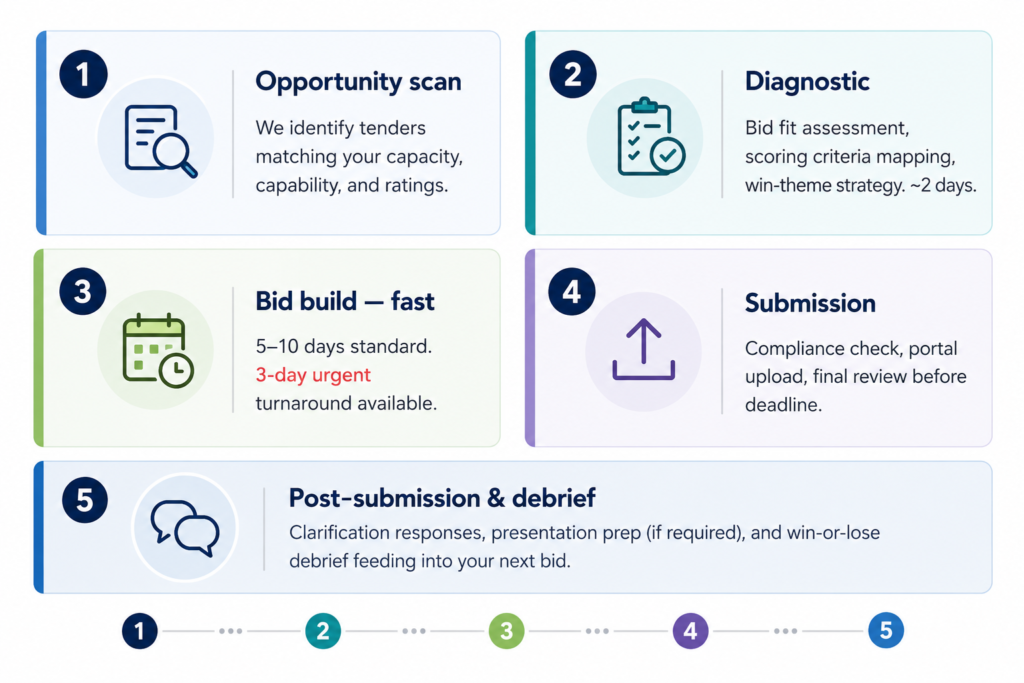
Our care tenders and contracts service finds the right routes in your area, prepares the qualification evidence and writes method statements that score. The CuraFlow policy libraries supply the tender-ready policy pack evaluators expect. And if you are earlier in the journey, our guide on how to get contracts for domiciliary care covers the full range of revenue routes beyond council commissioning.
Frequently asked questions
What is a dynamic purchasing system in social care?
A standing electronic list of approved providers that a council uses to place care packages, open to new joining applications throughout its life. Many councils commission
home care this way, and systems created under the previous rules continue until they expire.
What is a dynamic market under the Procurement Act 2023?
The successor to the DPS for procurements started under the new Act, in force since 24 February 2025: a standing list of qualified suppliers that stays open to applications, from which authorities can award contracts.
Do care contracts follow the full public procurement rules?
Social care sits within a lighter regime that gives authorities more flexibility in how they run procurements. The practical consequence is that each opportunity’s own documents govern, so read them closely every time.
Can a newly registered provider win council work?
Yes, most realistically through spot purchasing and by joining open systems early. New providers without delivery history win by being compliant, responsive and specific, then converting early packages into the track record bigger bids require.
Where are care tenders advertised?
Larger opportunities appear on the Find a Tender service, and councils also publish through their own procurement portals. Identifying and registering on the portals your local authorities actually use matters more than watching any single national site.
How much does it cost to bid for council care contracts?
Joining a DPS or dynamic market is normally free to apply; the real cost is preparation time. Providers typically spend several working days assembling the first qualification pack and a day or two per subsequent bid once the evidence library exists. Treat the first application as an investment that every later bid reuses.
Sources
- Transforming Public Procurement: the Procurement Act 2023, in force 24 February 2025 (gov.uk, accessed September 2026)
- Procurement Act 2023 (legislation.gov.uk, accessed September 2026)
- Find a Tender service (find-tender.service.gov.uk, accessed September 2026)